
Is It Worth Grading Your Pokémon Cards? An Honest Take on PSA vs CGC vs SGC
The honest answer to 'should I grade this?' — and how PSA, CGC and SGC really compare on cost and resale.
By THM · 6 min read
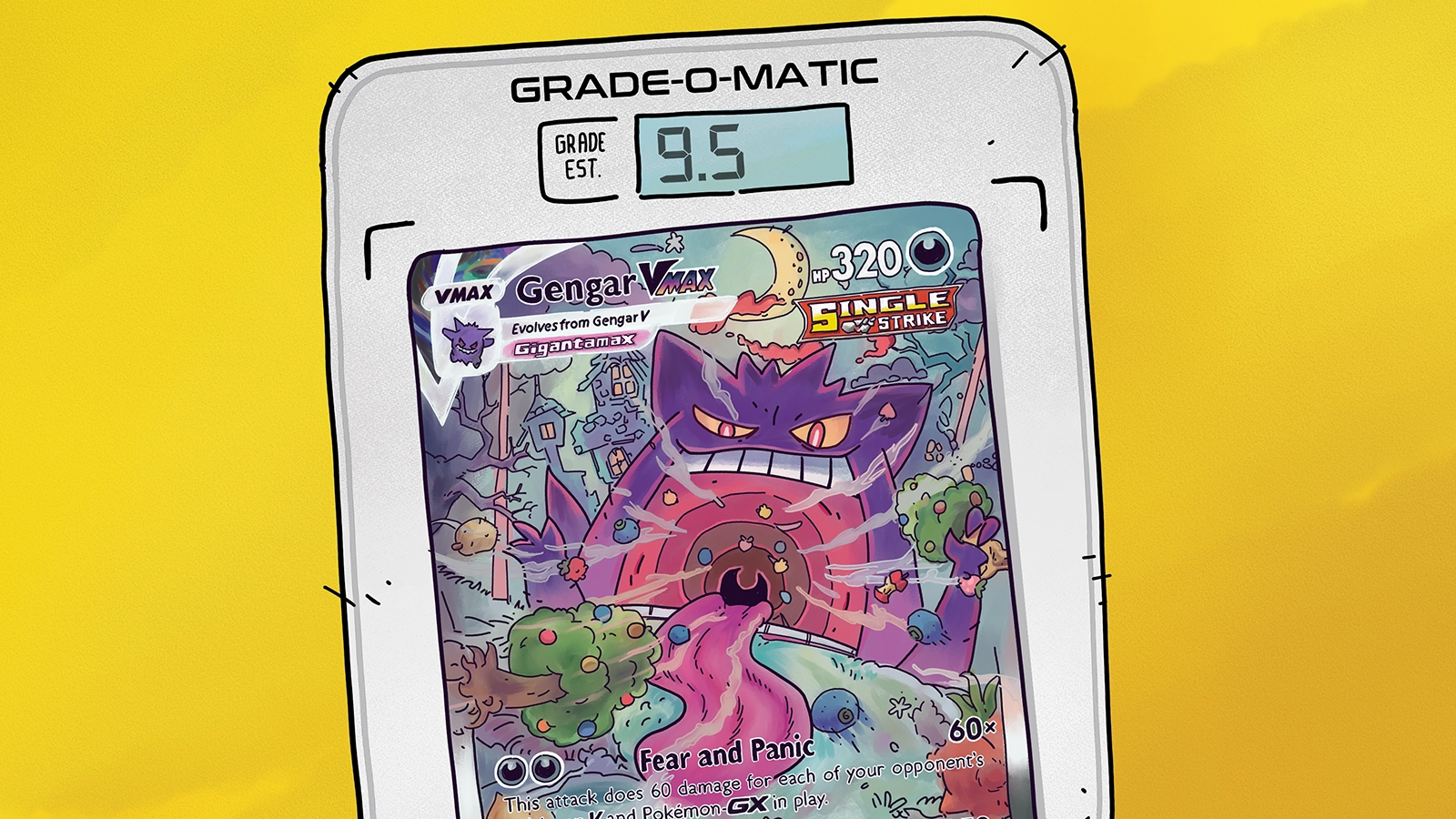
Let me be straight with you before we go any further: I'm a comics guy. I grew up on G.I. Joe, Batman, Spider-Man and X-Men, taught myself to draw by copying panels straight out of my own collection, and somewhere along the way the trading cards crept in too — Dawn, Vampirella, Marvel Masterpieces, those gorgeous Flair Ultra sets. Pokémon was never my main lane.
But "should I grade this card?" is the question I get asked more than any other, and here's the funny thing — the answer barely changes whether you're holding a holo Charizard or a '90s Jim Lee X-Men card. So that's the hat I'm wearing here. Not a Poké-expert. Just a collector who's watched this exact movie play out in the comic world for years, and who built a calculator to stop people losing money on it.
Short version: grading is worth it a lot less often than the internet would have you believe. Here's why.
What grading actually is (the 30-second version)
You send your card off to a company, they decide how minty it is on a scale up to 10, and they seal it in a tamper-proof plastic case — a "slab" — with that grade printed on the label. A pristine card in a slab is worth more than the same card loose, because a stranger on the internet can trust the grade without having to trust you.
If you've ever bought a CGC-slabbed comic, it's the identical idea. Same plastic tomb, same numbered label, same little jolt of "ooh, official" when it arrives.
The real question isn't "what grade" — it's "is it worth it"
Everyone fixates on the grade. Will it get a 10? Is it a 9? Fair enough — it's exciting. But that's the wrong question to lead with.
The right question is colder: will this card, once it's graded, be worth enough to cover what it cost me to grade it — and then some? Because grading isn't free, and it isn't fast, and a card sitting in a slab that nobody wants is just a more expensive version of the card you already had.
The three big names, quickly
There are three companies most Pokémon people argue about. Here's the honest, no-homework version:
PSA is the big one. The name everyone knows, the slab buyers trust most, and usually the one that fetches the highest resale. The catch: it's typically the priciest, and you need a paid membership to use it. You're paying for the brand on the label — and to be fair, that brand is real money when you go to sell.
CGC is the value pick. Cheaper, no membership required, and — this is the part people sleep on — for modern Pokémon it's crept right up close to PSA on resale. We're talking a small gap on a lot of modern cards. Which means once you factor in the lower fee, CGC quietly out-earns PSA on a good chunk of newer stuff. (Comic folks know CGC well; it's the same company that's been slabbing our funny books for years.)
SGC has a brilliant reputation, especially with vintage, and a clean-looking slab a lot of people love. But its footprint in modern Pokémon is smaller, so the resale can lag behind the other two on newer cards. Great for the right card, less so as a default.
There's no universal "best." There's only "best for this card."
Nobody likes the costs part (but here we are)
This is where the dream meets the spreadsheet. Grading one card isn't just the grading fee. It's:
- The grading fee itself
- Posting the card to them
- Postage and insurance back
- A sleeve, a top-loader, the protective bits
- And if you're on a paid tier, a slice of that membership
And here's my own little asterisk as an Aussie: all three of these companies are overseas, so for us it means posting valuable cardboard across the Pacific and quietly praying to the postal gods. That international leg adds cost, adds weeks, and adds a low hum of anxiety the whole time it's in transit. If you're grading from outside the US, build that in — it's real.
Add it all up and you land on a number I call the break-even: the price your graded card has to clear before you've made a single cent. Spoiler — it's higher than people expect.
So... is it actually worth grading?
Here's my honest rule of thumb, comic-brain and all:
Grading bulk modern cards usually makes no sense. If a card is worth a few bucks raw, slabbing it just turns a $3 card into a $3 card in a $20 jacket. The maths simply doesn't work, no matter how clean the card looks.
Grading genuinely valuable cards can absolutely be worth it — when the graded version clears your costs comfortably and you're confident in the condition. The trap is the gap between grades: a card that comes back a 9 instead of the 10 you were dreaming of can be worth a fraction of what you'd hoped. You're not buying a grade, you're gambling on one.
And condition has to be genuinely there. A card needs to be near-flawless to justify the trip. Soft corners and a bit of whitening, and you've paid premium postage to be told what you already knew.
If you want the actual numbers instead of my gut feel, that's literally why the calculator on this site exists.
What I'd actually do
This is the comics guy talking, so take it for what it's worth.
Grade the cards that are genuinely valuable, or the ones that mean something to you and you want protected forever. Everything else? Keep it raw and enjoy it. I've bought the odd slabbed comic, but I'm the type who likes cracking the case open and actually reading the thing — flipping through, smelling the paper, remembering where I was when I first got it. A lot of the joy of collecting gets quietly strangled the moment everything becomes an asset in a plastic box.
You don't have to grade a card to love it. Some of the cards worth the most to you are worth the least to a price guide, and that's a feature, not a bug.
Run the numbers before you post anything
Look — I'm not anti-grading. I'm anti losing money you didn't mean to lose. So before you bundle a card off overseas on a hunch, drop its numbers into the grading calculator. It'll do the boring break-even maths across PSA, CGC and SGC for you, tell you which one actually nets the most, and — refreshingly — it'll happily tell you when the answer is "mate, just keep it raw."
That's the whole point of the thing. A collection should be something you love, not a pile of bets you're quietly underwater on. Grade the keepers, enjoy the rest, and let the calculator be the wet blanket so you don't have to be.
Prices, fees and grading turnaround times change all the time, so treat the figures here as a guide and check current rates before you send anything off.
Run your card's numbers across PSA, CGC and SGC to see if grading actually clears the costs.
Open the grading calculator →More guides
 GUIDE
GUIDEHow to Start (and Actually Keep Track of) a Pokémon Collection
5 min read
Booster Boxes vs Singles: The Honest Answer (and Why I Ignored It)
GUIDEBooster Boxes vs Singles: The Honest Answer (and Why I Ignored It)
6 min read
How Much Is My Pokémon Card Worth? An Honest Guide
GUIDEHow Much Is My Pokémon Card Worth? An Honest Guide
6 min read
What Actually Makes a Card Valuable?
GUIDEWhat Actually Makes a Card Valuable?
6 min read
How to Spot a Fake Pokémon Card (and Avoid Getting Burned)
GUIDEHow to Spot a Fake Pokémon Card (and Avoid Getting Burned)
6 min read
Where to Actually Buy Pokémon Cards (and What to Watch Out For)
GUIDEWhere to Actually Buy Pokémon Cards (and What to Watch Out For)
6 min read
How to Store and Protect Your Cards (Without Going Overboard)
GUIDEHow to Store and Protect Your Cards (Without Going Overboard)
6 min read
 GUIDE
GUIDEHow to Read a Pokémon Card: What the Numbers and Symbols Actually Mean
5 min read